Enceladus, the hidden ocean that could harbour life
Share
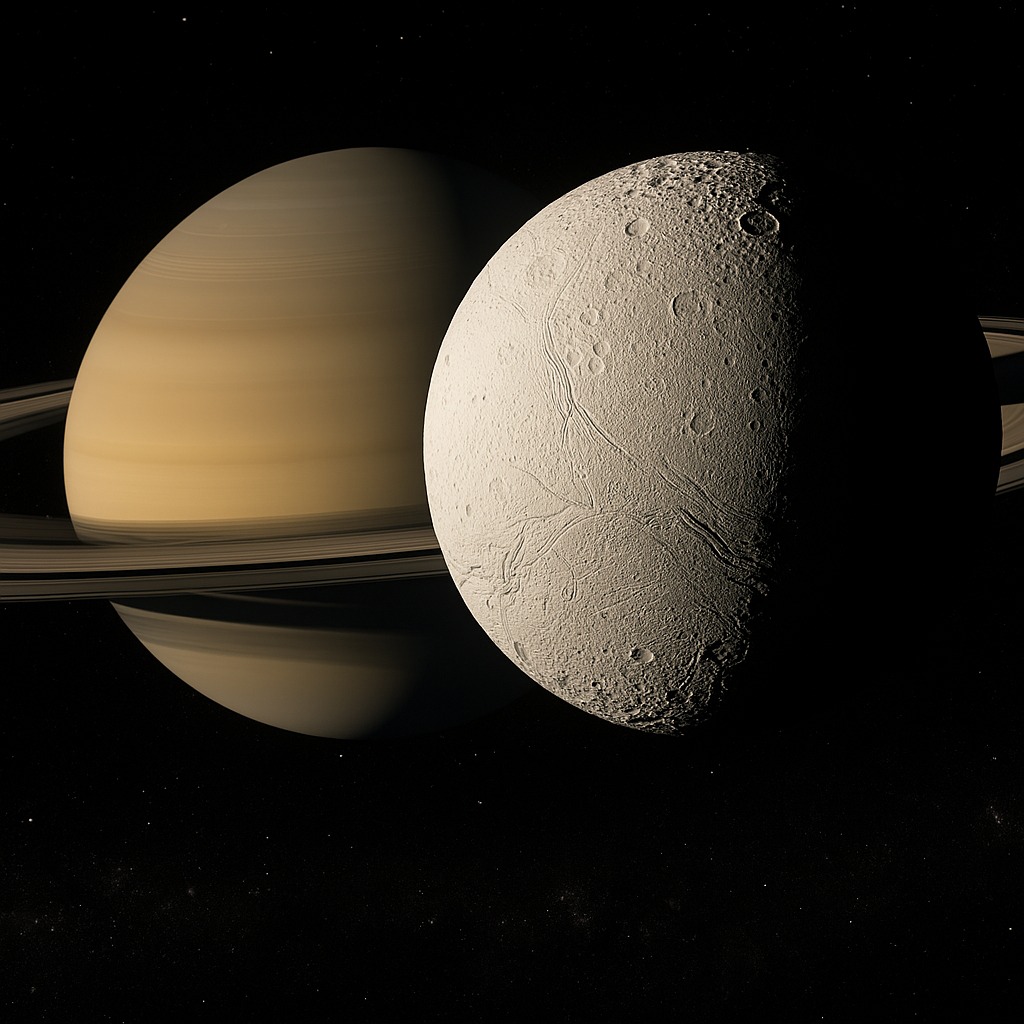
Beneath the icy crust of Enceladus, Saturn's small moon that has intrigued scientists for years, there could be an ocean capable of sustaining life in a stable manner. This is what emerges from a new study, based on data from the Cassini mission, which reconstructs the satellite's energy balance and reveals a surprising detail: heat comes not only from the famous south pole, crossed by jets of water rising into space, but also from the north pole, hitherto considered “silent”.
According to the authors, the total heat flow is around 54 gigawatts, a power compatible with the tidal forces that agitate the moon and sufficient to keep the underground ocean liquid for very long periods. This is a valuable clue, because stability over time is one of the fundamental requirements for any forms of life to develop and persist.
Crucial questions remain, first and foremost how long that ocean has existed. But each new piece of data adds another piece to an increasingly fascinating picture: in a distant, frozen world, where sunlight is only a glimmer, there could be a sea pulsing with energy and possibilities.
We've detected you might be speaking a different language. Do you want to change to:

 Italian
  English
 French
 Spanish
 German