In the heart of a stellar explosion, the «missing ingredients» of the Universe
Share
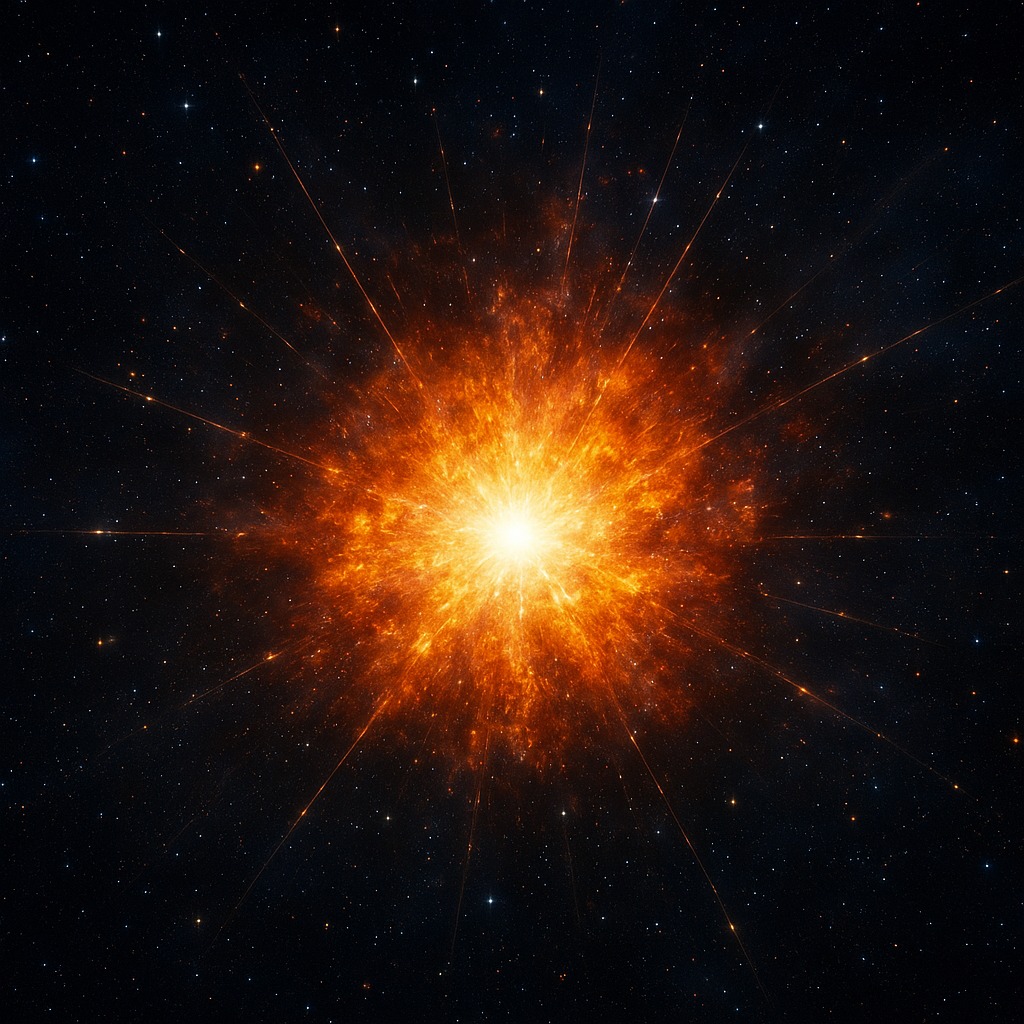
In a remote corner of our galaxy, the ghost of a star that once shone brighter than the Sun whispered a cosmic secret. In the remains of the Cassiopeia A supernova, about 11,000 light-years away, the sensitive eyes of a space telescope detected the presence of two elements that had long eluded observation: chlorine and potassium.
These particles are not mere symbols on the periodic table, but essential chapters in the history of the universe: they are among those “odd” building blocks that traditional theories struggled to attribute precisely to violent star explosions. Theoretical models had only partially predicted their existence, thus leaving a gap in our cosmic maps.
The discovery is the result of work by the XRISM X-ray telescope, a Japanese space observatory with extraordinary sensitivity, led by Kai Matsunaga of Kyoto University and an international collaboration of astrophysicists. With its Resolve instrument, XRISM was able to capture surprising details in the X-rays emitted by the supernova debris, revealing light and shadow in the chemical signatures of those ancient materials.
In an ever-expanding universe, we have always known that stars are factories of elements: forges where lighter atoms fuse together to create increasingly complex components. But some of these — such as chlorine and potassium — had so far eluded our measurements, creating a sort of gap in our understanding of stellar recipes.
This new evidence offers us a deeper insight into the processes that forged the fundamental ingredients for planets, oceans and – who knows – perhaps for life itself. What was once a mystery is now tinged with poetry: from a dying star that exploded thousands of years ago come the chemical seeds of our own cosmic home.
We've detected you might be speaking a different language. Do you want to change to:
 Italian
  English
 French
 Spanish
 German