In 2024, the scientific community achieved significant results in astronomy, both in the search for exoplanets and in the study of the Solar System.
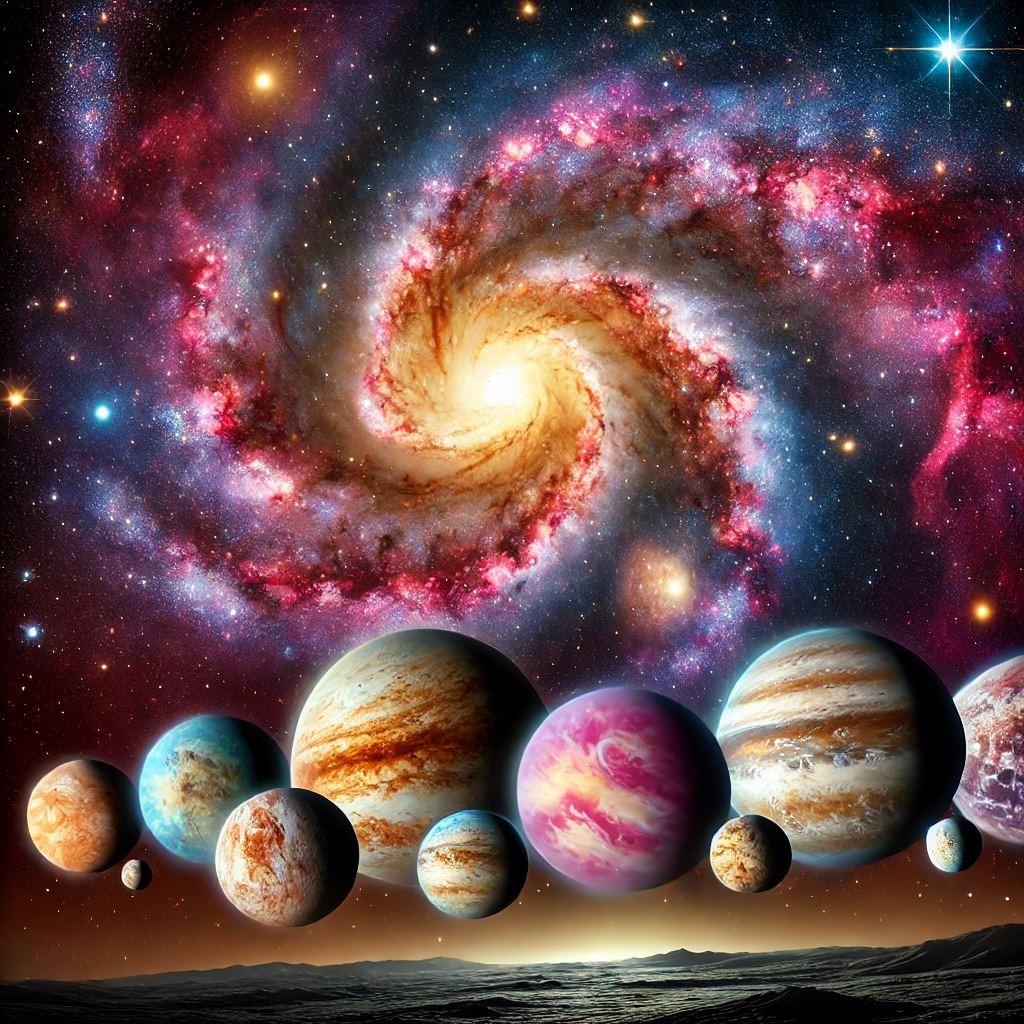
Exoplanets Gliese 12 b: Exoplanet 40 light years away, with temperatures between 10-41°C, potentially habitable if it has a suitable atmosphere. TOI-715 b: Rocky planet, three times more massive than Earth, located in the habitable zone of its star. Barnard b: Planet near Barnard's Star, interesting for future observations due to its proximity to the Solar System. Gas giants: TESS has identified many Jupiter-like planets, which are useful for studying the evolution of planetary systems. Global progress: The threshold of 7,300 known exoplanets has been exceeded, using advanced techniques such as transits and radial velocity. Water in the Solar System Mimas and Miranda: Underground oceans discovered on Saturn and Uranus“ moons respectively, expanding the list of ”ocean worlds'. Comet 67P: The similarity between the comet's water and that on Earth reopens the debate on the origin of water on Earth. Asteroid Bennu: Organic compounds and minerals linked to water have been detected, which are fundamental to understanding the primordial conditions of the Solar System. Planetary formation: New studies show how planetesimals distributed water during the formation of the Solar System. These advances highlight the importance of space missions and Earth-based observations for better understanding our Universe and the origin of life.
We've detected you might be speaking a different language. Do you want to change to:
 Italian
  English
 French
 Spanish
 German