
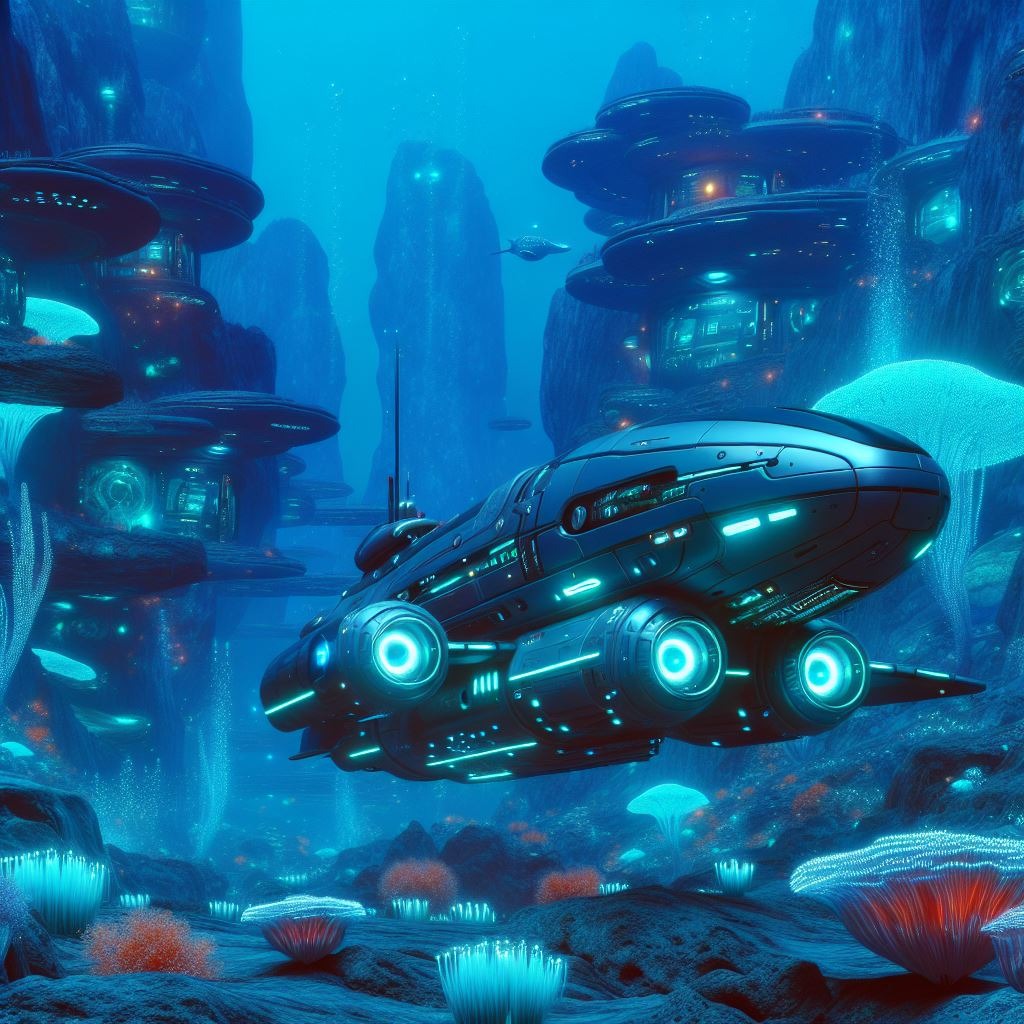
NASA has begun initial testing for the development of prototypes of futuristic robotic submarines as part of the SWIM (Sensing With Independent Micro-swimmers) project. One day, these drones could be sent to moons in the Solar System, such as Jupiter's moon Europa, to explore hidden oceans in search of traces of life. In the Caltech swimming pool [...]
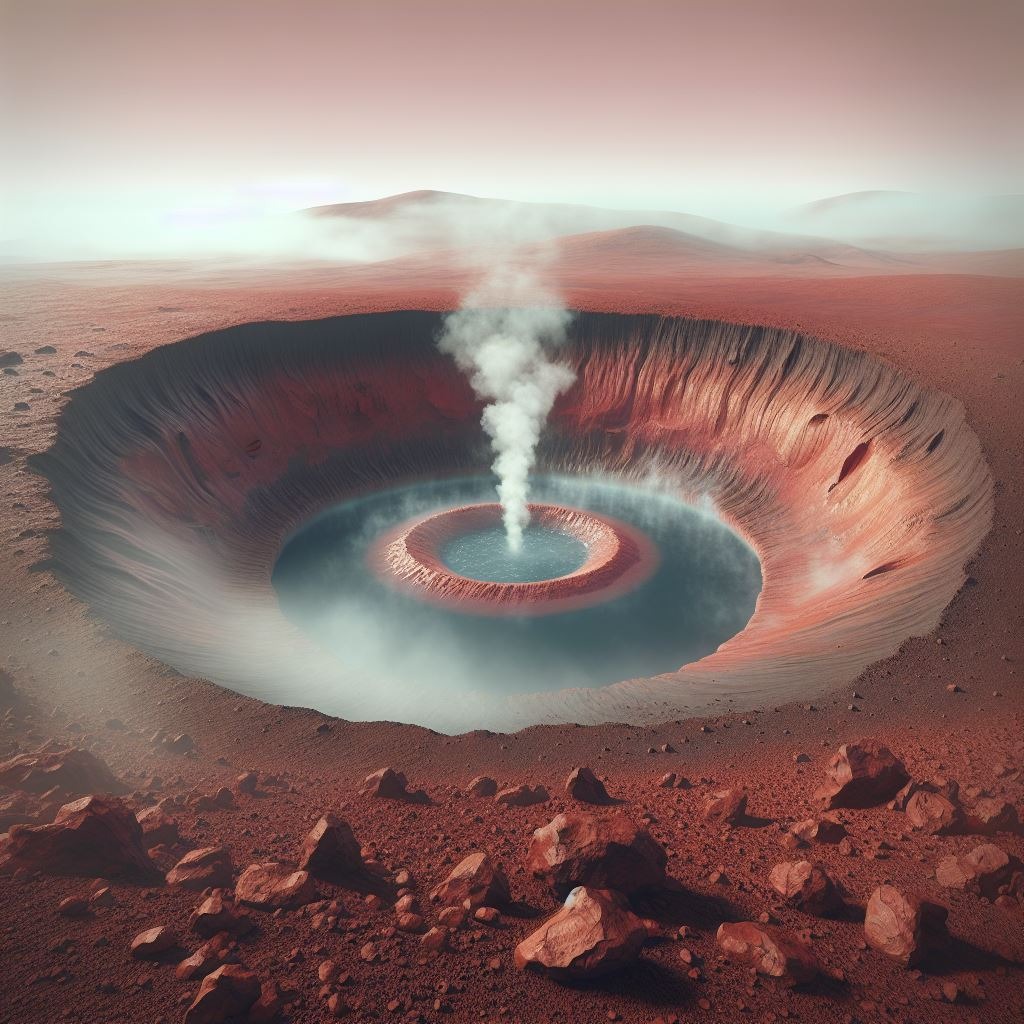
There was hot water on Mars 4.45 billion years ago. This extraordinary clue, which makes the presence of conditions suitable for life on the red planet more likely, comes from a study published in Science Advances. The discovery is based on the analysis of zircon contained in the Martian meteorite NWA 7034, known as Black Beauty for its […]
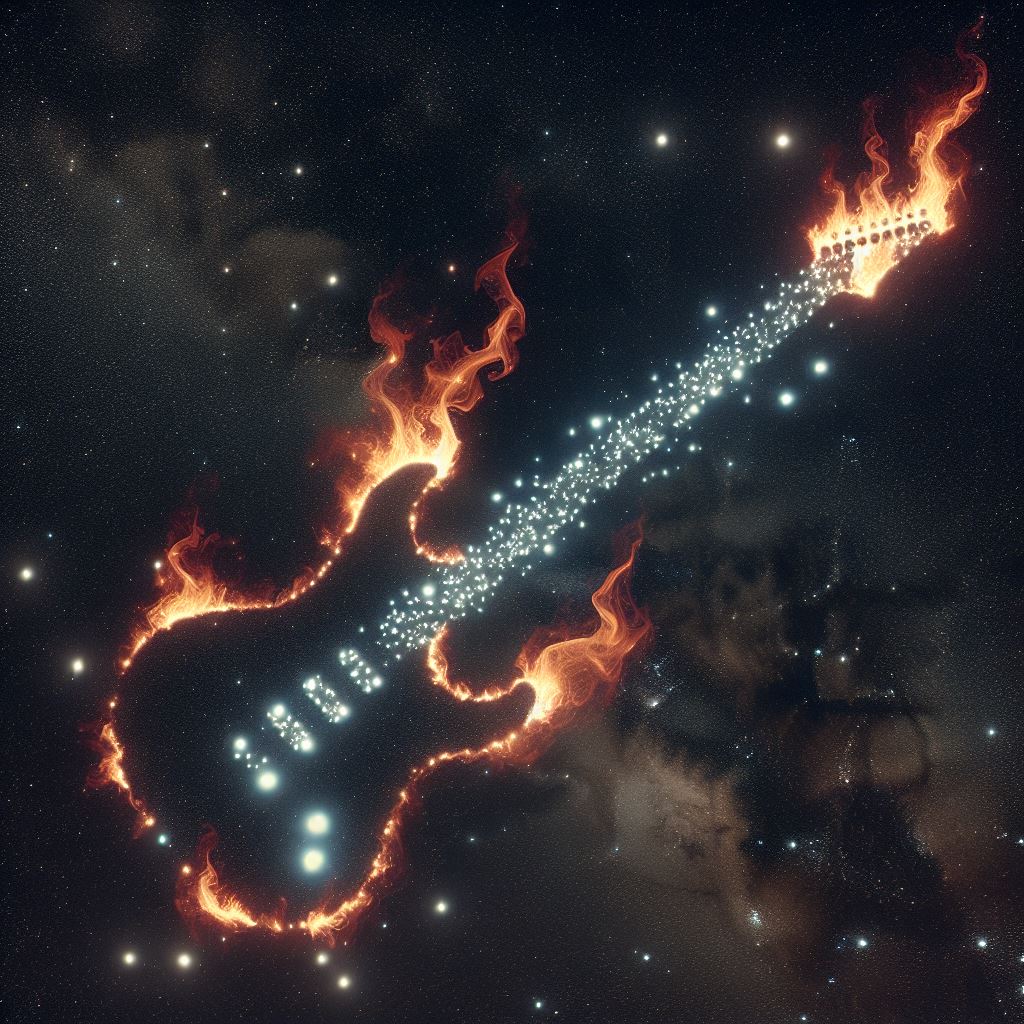
Imagine a flaming guitar floating in space, sparking the imagination of astronomers and heavy metal fans alike: this is not science fiction, but reality. This extraordinary celestial object, known as the Guitar Nebula, was captured by the Hubble Space Telescope, NASA's Chandra X-ray Observatory, and the legendary Mount Palomar Observatory […]
Thanks to an extraordinary technological innovation, it has been possible to capture WOH G64, a red supergiant located in the Large Magellanic Cloud, 160,000 light years from Earth. This exceptional result was achieved by Andrés Bello University in collaboration with ESO's Very Large Telescope Interferometer (VLTI) in the Atacama Desert, Chile. A stellar close-up without [...]
Today we celebrate the birth of Edwin Powell Hubble (20 November 1889 – 28 September 1953), one of the greatest astronomers in history. His discoveries revolutionised our understanding of the universe, expanding its boundaries far beyond the Milky Way. Among his most significant contributions are:
Uranus is known to be one of the most “strange” planets in the Solar System, but apparently its peculiarity could be just the result of an unfortunate coincidence. A recent study published in Nature Astronomy and led by Jamie Jasinski of the California Institute of Technology (Caltech) suggests that anomalies in the magnetic field [...]
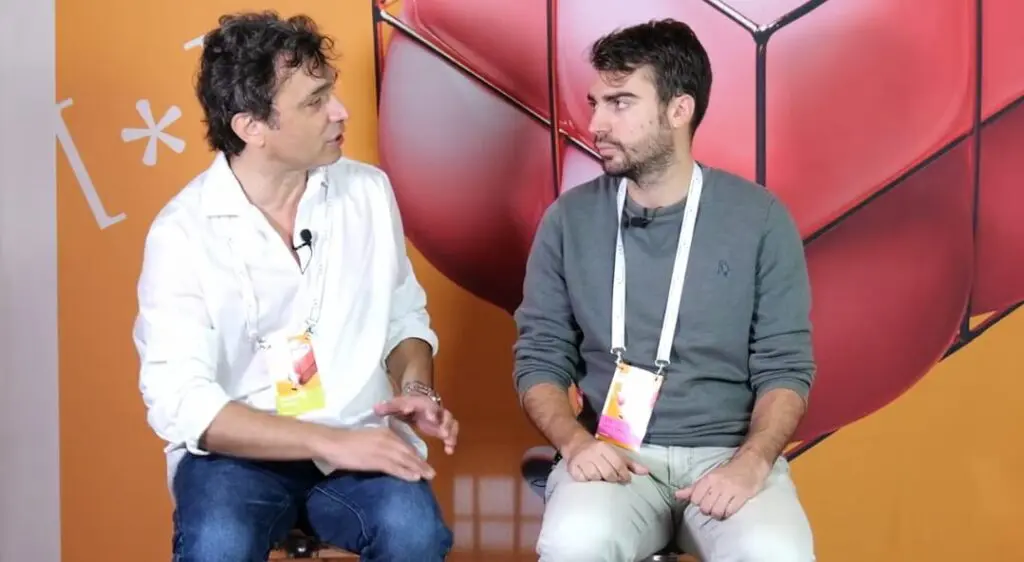
Giovanni Covone, astrophysicist and professor at Federico II University in Naples, was one of the guests at the latest edition of the Genoa Science Festival. He is interested in the study of exoplanets, astrobiology and cosmology, but communicating scientific ideas is his other passion: he is the author of Altre terre. Viaggio alla scoperta dei […] (Other Earths: A Journey to Discover […]).
In the film Arrival, a linguist must decipher an alien language based on palindromic phrases. Today, if we were faced with a similar situation, research into artificial intelligence (AI) could help us understand how languages develop. Although human language leaves no traces in fossils, we can simulate the evolution of language using AI, which […]
The Voyager 1 probe, launched by NASA in 1977, recently established contact with Earth using a transmitter that had been inactive since 1981. This extraordinary event marks a significant moment in the history of space exploration, as Voyager 1 is the spacecraft furthest from our planet. An Incredible Journey After being launched on 5 September […]
 Italian
  English
  French
  Spanish
  German